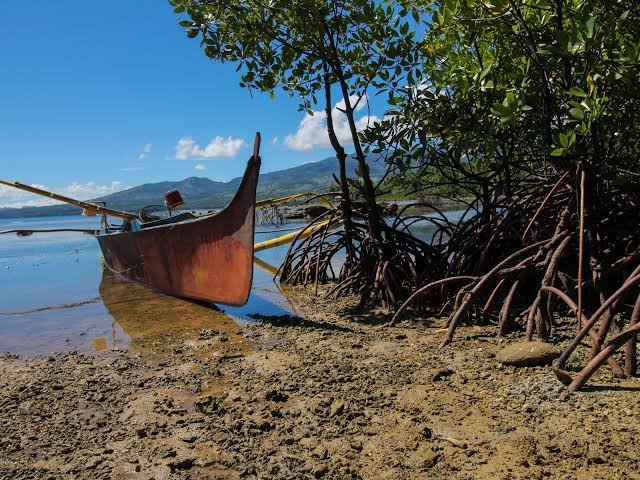
At first glance, a mangrove forest may not look extraordinary. Its roots rise from muddy water, its leaves move with the tide, and small creatures disappear among the branches. But beneath that seemingly quiet landscape is an ecosystem connected to fisheries, wildlife, coastal protection and climate. Along the Philippine coastline, mangroves are doing a job that often goes unnoticed, standing where land meets sea and providing shelter for life above and below the water.
Mangroves are woody trees and shrubs that grow in coastal areas affected by high and low tides, including tidal flats, shallow coastal waters, river mouths and brackish-water environments.
They provide habitat and nursery areas for fish, crabs, prawns and other organisms. Their dense roots create spaces where young marine animals can hide, grow and find food. At the same time, these forests act as natural barriers, helping protect coastlines from waves, erosion and storm surges.
Adapted to brackish environments, waterlogged soils and regular tidal flooding, mangroves survive in conditions where many other plants cannot. Their ability to live between land and sea makes them especially valuable to coastal communities.
For fisherfolk, a healthy mangrove forest can mean more than just a landscape. It can be part of their livelihood. Fish, crabs and other organisms that use mangroves as feeding or nursery grounds can eventually support fisheries that families depend on for food and income. In this way, the roots of a mangrove can become connected to the daily lives and future of people living along the coast.
But even these resilient protective barriers are not exempt from human activities.
Reclamation, cutting, pollution and unsustainable resource use can threaten mangrove forests. When mangroves disappear, the effects can extend beyond the trees themselves. Animals can lose important habitat, coastal areas can become more exposed, and communities that depend on coastal resources can face additional challenges.
And while mangroves can be restored, planting seedlings is not the entire process.
Mangroves may stand quietly along the shore, but their importance reaches far beyond their roots. They protect coastlines, shelter marine life, support fisherfolk and help sustain the communities that depend on the sea. Yet their future depends on more than planting new trees’; it depends on protecting the forests that are already there.
Every mangrove lost is more than a tree disappearing from the coastline. It is a shelter destroyed, a natural barrier weakened, and a resource placed at risk.
They stand where the land ends and the sea begins. Protecting them means protecting everything that depends on both.
Mangroves also store carbon in their vegetation and, importantly, in the sediments beneath them. This makes their conservation relevant not only to coastal protection and fisheries, but also to efforts to address climate change.
Yet perhaps the most important thing about mangroves is easy to overlook: they are living ecosystems, not simply rows of trees waiting to be planted.
Under their branches, young fish grow. Between their roots, crabs and other organisms find shelter. Along their edges, people work and communities build their lives. Every tide brings movement through the forest, connecting the land, freshwater and sea.
The quietness of a mangrove forest can make its importance easy to miss. But its silence does not mean that nothing is happening.
Every root holding soil, every fish seeking shelter and every wave slowed by tangled branches represents a small part of a much larger system.
Protecting mangroves, therefore, is not simply about protecting trees.
It is about protecting the relationships between people, fisheries, wildlife and the coast and ensuring that where land meets sea, both can continue to thrive.
Leave a Reply