Author: admin

  • Behind Every Colorful locomotive found in the Philippines

    Behind Every Colorful locomotive found in the Philippines

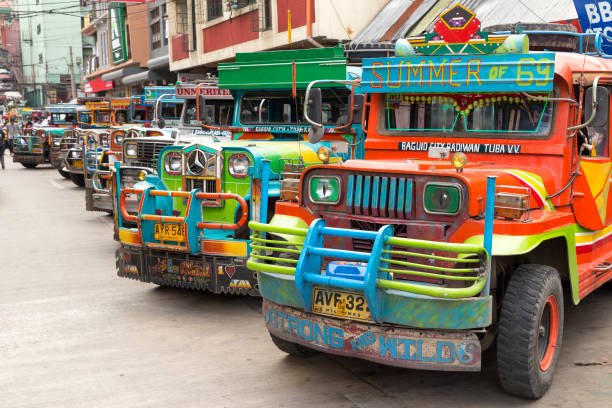
    Before the sun fully rises, jeepney drivers prepare for another day. Students hop in on their way to school, loads of workers fill in, squeezing in cramped space on their morning commute, and passengers pass coins one by another. For generations, the jeepney has been more than just a vehicle to get from one place to another—it has become part of the country’s culture, livelihood, and everyday identity. Now as public transportation becomes modernized and changes the way the system operates, the familiar jeepney stands between tradition and change.

    Behind every jeepney is a story of people who depend on it. Drivers earn from their daily routes, passengers rely on it to reach school and work, and builders turn ordinary vehicles into colorful expressions of every Filipino identity. Modernization now brings this people into a changing transportation system.

    As the sun peaks at lunch hour —the driver adjusts the steering wheels slightly to ensure its 

    The vehicle stays on the right path, colorful of newly painted different figures displayed around his vehicle, sweat beads on his forehead as the heat absorbs almost the entire air of his electric fan but stays focused on how many passengers he can serve at this hour to earn a living. Minutes later, the vehicle is starting to attract people then claiming the empty spaces. As the engine begins to start, others are passing coins to each other to the driver and calling out their destinations.

    After hours of sending passengers to their places, the driver sighed out of exhaustion and took a look at his unopened lunchbox—the food he had cooked since morning had released moisture around the box, realizing that the warmth had already fade and didn’t make it until noon. He proceeded to open it with careful ease and grabbed the utensils, eating silently as he thought about the changes in public transportation. He was there when it changed—watched how the PTMP officials worked with the project of banning the jeepneys in the future.

    A jeepney may be made with metal, and chromic paint, but its meaning comes from the people behind who ride, drive, and build depend on it. As the Philippines move toward a modern transport system, the challenge is not only to create newer vehicles, but to remember the people and everyday stories that made the jeepney a Filipino icon. Whether traditional or modern,its journey continues with the millions of Filipinos who depend on the road every day. 

  • Those Giant Eyes: Inside the World of the Philippine Tarsier

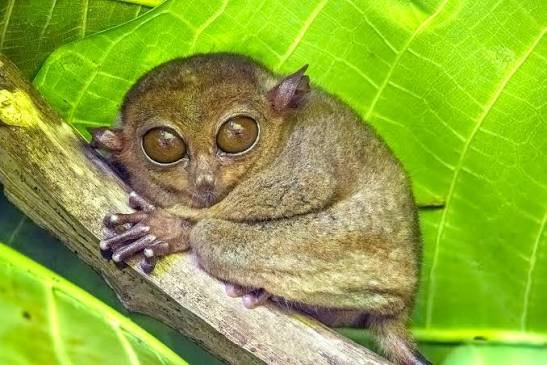
    Those Giant Eyes: Inside the World of the Philippine Tarsier

    In the forests of Bohol, a tiny nocturnal primate quietly watches the darkness. But behind those enormous eyes is a species whose survival depends on how carefully people treat the forest it calls home.

    At first, you might think it is watching you.

    Two enormous eyes stare from the darkness. A tiny body clings tightly to a branch, almost perfectly still. Its ears twitch. Its head turns slightly. Then, in a flash, it disappears into the vegetation.

    This is the Philippine tarsier, locally known as the “maomag”, one of the country’s smallest and most recognizable mammals.

    It may fit comfortably in the palm of a hand, but its importance stretches far beyond its size.

    In the forests of Bohol, particularly around Corella, Sikatuna and Loboc, the tarsier has become more than a symbol of wildlife. It represents the delicate relationship between animals, forests, communities and tourism.

    And sometimes, protecting something small requires seeing the bigger picture.

    Unlike animals that are active during the day, the tarsier comes alive after sunset. While the forest is quiet during daylight hours, it rests by clinging to branches and vegetation.

    When night falls, it becomes a hunter.

    Its large eyes help it see in low-light conditions, while its powerful hind legs allow it to leap between branches. Its hands and feet provide a strong grip as it moves through the vegetation.

    And despite its innocent appearance, the tarsier is a predator.

    It feeds mainly on insects and other small animals, searching through the forest at night for its next meal.

    The giant eyes that make the tarsier so fascinating to tourists are not simply there to make it look unusual. They are part of the animal’s adaptation to a world dominated by darkness.

    The tarsier’s size is one of the reasons it captures attention.

    But its value cannot be measured by its appearance.

    As an endemic species, the Philippine tarsier is naturally found only in the Philippines. Losing it would therefore mean losing a piece of the country’s unique natural heritage.

    In Bohol, that connection is particularly visible.The Philippine Tarsier Sanctuary in Corella provides visitors with an opportunity to observe the animals in a protected environment. Conservation efforts involving organizations, government agencies, local communities and guides aim to protect both the tarsiers and the habitats they depend on.

    For visitors, the experience can be memorable.

    But for the tarsier, a visitor is still a disturbance if proper care is not taken.

    There is a reason visitors are told to lower their voices.

    There is a reason touching is prohibited.

    There is a reason camera flashes are discouraged.

    The tarsier is a wild animal, not a stuffed toy brought to life for photographs.

    Its small size and unusual appearance can make it tempting to approach. But responsible wildlife tourism requires the opposite: observe without interfering.

    Visitors to tarsier conservation areas are encouraged to remain quiet, avoid touching the animals, keep their distance and follow the instructions of guides.

    The goal is not simply to give tourists a closer look.

    It is to allow people to see the animal without making the animal pay the price for being seen.

    A tarsier cannot survive simply because a sanctuary has a sign bearing its name. It needs a suitable habitat.

    Trees and vegetation provide the branches where it rests, moves and hunts. The forest provides insects and other prey. The surrounding ecosystem creates the conditions that allow the species to continue living.

    This is why tarsier conservation is ultimately also habitat conservation.

    For years, the species has faced threats including habitat loss, hunting, illegal capture, wildlife trade and improper captivity.

    Keeping a tarsier as a pet may seem harmless because of its small size. But a forest animal has needs that a household cannot simply reproduce.

    A tarsier belongs in an environment where it can behave like a tarsier—not where it is treated like a domesticated animal.

    The tarsier’s unusual appearance has helped make it famous. But that fame comes with a risk.

    When wildlife becomes a tourist attraction, there is always a line between appreciation and exploitation.

    Tourism can help create awareness, provide employment and support conservation activities. Visitors can leave Bohol knowing more about the species and why its habitat matters.

    But unmanaged tourism can also bring noise, disturbance and pressure on wildlife sites.

    The challenge, therefore, is not simply to bring more people to see the tarsier.

    It is to make sure that people can see it without harming what they came to admire.

    The story of the Philippine tarsier extends beyond Bohol’s tourism industry.

    It is part of the country’s biodiversity and natural heritage. Bohol’s recognition as the Philippines’ first UNESCO Global Geopark in 2023 further places the tarsier within a broader story of the island’s geological, biological and cultural treasures.

    The tarsier is one small piece of that landscape. But sometimes, a small piece can tell the story of an entire ecosystem.

    When a forest disappears, the tarsier loses more than a place to sleep. It loses hunting grounds, shelter and the environment that has allowed its species to survive.

    That is why conservation cannot stop at protecting the animal people see.

    It must also protect the forest people may never notice.

    The Philippine tarsier has survived by adapting to the darkness. But its future depends on what happens in the light.

    Every quiet observation, every protected forest and every decision not to capture or disturb wildlife contributes to a larger effort to keep the species in its natural home.

    The tarsier does not need to be touched to be appreciated.

    It does not need a flash photograph to prove that it was there.

    Sometimes, the most responsible way to experience wildlife is simply to stand quietly, look into those enormous eyes and then let the animal return to the forest.

    Because the Philippine tarsier may be tiny, but its disappearance would leave a much larger silence.

    Those giant eyes have watched the Philippine forests for generations. The question now is whether we will protect the forests long enough for them to keep watching.
  • Where Land Meets Sea: The Quiet Life of Mangroves

    Where Land Meets Sea: The Quiet Life of Mangroves

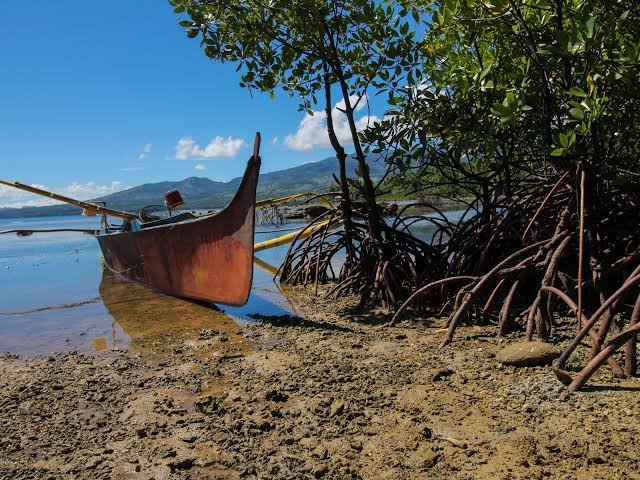
    At first glance, a mangrove forest may not look extraordinary. Its roots rise from muddy water, its leaves move with the tide, and small creatures disappear among the branches. But beneath that seemingly quiet landscape is an ecosystem connected to fisheries, wildlife, coastal protection and climate. Along the Philippine coastline, mangroves are doing a job that often goes unnoticed, standing where land meets sea and providing shelter for life above and below the water.

    Mangroves are woody trees and shrubs that grow in coastal areas affected by high and low tides, including tidal flats, shallow coastal waters, river mouths and brackish-water environments.

    They provide habitat and nursery areas for fish, crabs, prawns and other organisms. Their dense roots create spaces where young marine animals can hide, grow and find food. At the same time, these forests act as natural barriers, helping protect coastlines from waves, erosion and storm surges.

    Adapted to brackish environments, waterlogged soils and regular tidal flooding, mangroves survive in conditions where many other plants cannot. Their ability to live between land and sea makes them especially valuable to coastal communities.

    For fisherfolk, a healthy mangrove forest can mean more than just a landscape. It can be part of their livelihood. Fish, crabs and other organisms that use mangroves as feeding or nursery grounds can eventually support fisheries that families depend on for food and income. In this way, the roots of a mangrove can become connected to the daily lives and future of people living along the coast.

    But even these resilient protective barriers are not exempt from human activities.

    Reclamation, cutting, pollution and unsustainable resource use can threaten mangrove forests. When mangroves disappear, the effects can extend beyond the trees themselves. Animals can lose important habitat, coastal areas can become more exposed, and communities that depend on coastal resources can face additional challenges.

    And while mangroves can be restored, planting seedlings is not the entire process.

    Mangroves may stand quietly along the shore, but their importance reaches far beyond their roots. They protect coastlines, shelter marine life, support fisherfolk and help sustain the communities that depend on the sea. Yet their future depends on more than planting new trees’; it depends on protecting the forests that are already there.

    Every mangrove lost is more than a tree disappearing from the coastline. It is a shelter destroyed, a natural barrier weakened, and a resource placed at risk.

    They stand where the land ends and the sea begins. Protecting them means protecting everything that depends on both.

    Mangroves also store carbon in their vegetation and, importantly, in the sediments beneath them. This makes their conservation relevant not only to coastal protection and fisheries, but also to efforts to address climate change.

    Yet perhaps the most important thing about mangroves is easy to overlook: they are living ecosystems, not simply rows of trees waiting to be planted.

    Under their branches, young fish grow. Between their roots, crabs and other organisms find shelter. Along their edges, people work and communities build their lives. Every tide brings movement through the forest, connecting the land, freshwater and sea.

    The quietness of a mangrove forest can make its importance easy to miss. But its silence does not mean that nothing is happening.

    Every root holding soil, every fish seeking shelter and every wave slowed by tangled branches represents a small part of a much larger system.

    Protecting mangroves, therefore, is not simply about protecting trees.

    It is about protecting the relationships between people, fisheries, wildlife and the coast and ensuring that where land meets sea, both can continue to thrive.

  • Record Water Production Fails to Meet Central Visayas Demand

    Record Water Production Fails to Meet Central Visayas Demand

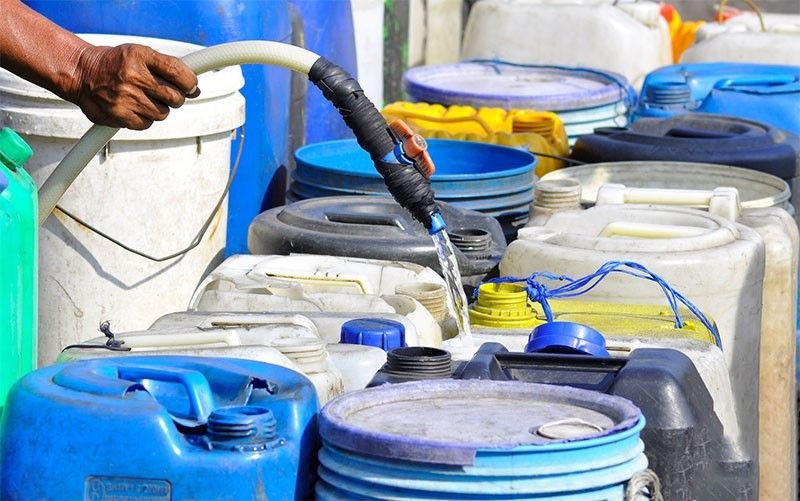
    Central Visayas water districts recorded the largest water deficit in the Visayas despite producing a record 12 million cubic meters of water in 2021, according to a Philippine Institute for Development Studies (PIDS) discussion paper.

    The study, titled “Securing Tomorrow’s Water,” showed that Central Visayas had the highest water demand among the Visayas regions, exceeding 10 million cubic meters. However, water districts in the region still faced an average deficit of four million cubic meters.

    From 2019 to 2024, water districts across the Visayas recorded an average demand of 8.9 million cubic meters, compared with only 6.3 million cubic meters of effective supply, resulting in a 2.7-million-cubic-meter negative water balance.

    The study also found that water districts in the Visayas had an average coverage rate of 68 percent, below the 85 percent benchmark for adequate supply performance. While Central Visayas reported 100 percent coverage, the region continues to face pressure from groundwater extraction, pollution and population growth.

    PIDS also noted that 60 percent of water districts in the Visayas rely on wells. Excessive groundwater extraction has contributed to saltwater intrusion in coastal areas, particularly in Metro Cebu and Lapu-Lapu City. 

  • Central Visayas Classroom Projects Remain Delayed

    Central Visayas Classroom Projects Remain Delayed

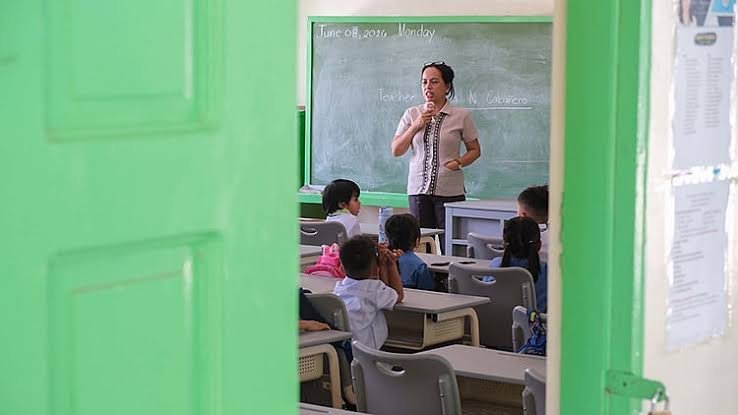
    MANDAUE CITY — Schools across Central Visayas are turning to double-shift schedules as a shortage of more than 10,000 classrooms continues to affect students at the start of School Year 2026–2027.

    The Department of Education 7 reported on June 8 that Cebu needs 8,287 additional classrooms while Bohol faces a shortage of 1,713. The shortage was worsened by disasters in 2025, including a magnitude 6.9 earthquake in northern Cebu and Typhoon Tino, which left several school buildings unsafe for use.

    DepEd 7 had planned to address the shortage through new classroom construction and repairs. However, six months into 2026, no new DepEd-funded classroom project in Central Visayas had broken ground as the regional office continued to wait for the Central Office’s priority project listings. Temporary Learning Spaces and planned temporary shelters are being used while permanent facilities remain delayed due to ___________

    The shortage has forced schools to maximize existing spaces through morning and afternoon shifts, while some affected students rely on blended learning. In Lapu-Lapu City, a classroom fire at Sudtonggan Elementary School on the first day of classes further highlighted the pressure on school facilities. The fire damaged part of the ceiling and left seven adjacent rooms unusable, although no students or staff were injured.

    With classroom construction and repairs still pending; DepEd 7 continues to rely on temporary facilities and alternative learning methods to keep students in school while permanent classrooms remain unavailable. 

  • ₱7.2 Trillion 2027 Budget Proposed Amid Economic Slowdown

    ₱7.2 Trillion 2027 Budget Proposed Amid Economic Slowdown

    President Ferdinand Marcos Jr. urged Congress on Tuesday to approve a ₱7.2-trillion proposed national budget for 2027, a 6% increase from this year, as the government works to regain economic momentum following slower growth and reduced infrastructure activity.

    The proposed spending plan would allocate ₱1.15 trillion to education, the largest share of the budget, although the amount is 11.5% lower than this year’s ₱1.3 trillion allocation. Healthcare would receive ₱353.8 billion, while agriculture would get ₱261.7 billion, both lower than their 2026 allocations.

    The Department of Public Works and Highways is set to receive ₱644 billion, a 22% increase from ₱530 billion this year. The agency has been at the center of an infrastructure scandal, with its 2026 budget previously reduced by about 40% from an initial proposal of ₱881 billion amid allegations of irregularities in public works projects.

    Defense spending would also increase to ₱328.8 billion, up from ₱305.5 billion, while ₱316 billion of the overall budget increase would cover mandatory obligations such as salary adjustments for military and uniformed personnel.

    The government expects ₱6.9 trillion in total disbursements against ₱5.2 trillion in revenues, resulting in a projected ₱1.7-trillion fiscal deficit to be financed through borrowing. The proposed budget comes as the economy grew only 2.3% in the second quarter, its weakest pace since 2021, while the government targets 5% to 6% annual growth from 2027 to 2030. 

  • Hello world!

    Welcome to WordPress. This is your first post. Edit or delete it, then start writing!