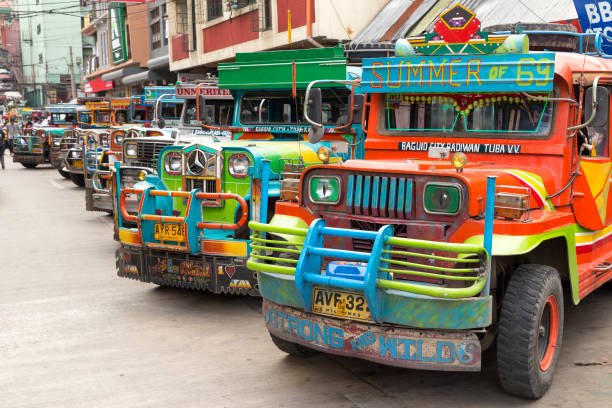
Before the sun fully rises, jeepney drivers prepare for another day. Students hop in on their way to school, loads of workers fill in, squeezing in cramped space on their morning commute, and passengers pass coins one by another. For generations, the jeepney has been more than just a vehicle to get from one place to another—it has become part of the country’s culture, livelihood, and everyday identity. Now as public transportation becomes modernized and changes the way the system operates, the familiar jeepney stands between tradition and change.
Behind every jeepney is a story of people who depend on it. Drivers earn from their daily routes, passengers rely on it to reach school and work, and builders turn ordinary vehicles into colorful expressions of every Filipino identity. Modernization now brings this people into a changing transportation system.
As the sun peaks at lunch hour —the driver adjusts the steering wheels slightly to ensure its
The vehicle stays on the right path, colorful of newly painted different figures displayed around his vehicle, sweat beads on his forehead as the heat absorbs almost the entire air of his electric fan but stays focused on how many passengers he can serve at this hour to earn a living. Minutes later, the vehicle is starting to attract people then claiming the empty spaces. As the engine begins to start, others are passing coins to each other to the driver and calling out their destinations.
After hours of sending passengers to their places, the driver sighed out of exhaustion and took a look at his unopened lunchbox—the food he had cooked since morning had released moisture around the box, realizing that the warmth had already fade and didn’t make it until noon. He proceeded to open it with careful ease and grabbed the utensils, eating silently as he thought about the changes in public transportation. He was there when it changed—watched how the PTMP officials worked with the project of banning the jeepneys in the future.
A jeepney may be made with metal, and chromic paint, but its meaning comes from the people behind who ride, drive, and build depend on it. As the Philippines move toward a modern transport system, the challenge is not only to create newer vehicles, but to remember the people and everyday stories that made the jeepney a Filipino icon. Whether traditional or modern,its journey continues with the millions of Filipinos who depend on the road every day.
Leave a Reply